
Media
Legacies Project Oral History: Mary Frazier
Mary Frazier was born in 1910 in Marion, Arkansas, where her father owned a 140-acre cotton farm. She describes sharecropping, Black land-ownership, and the devastating effects of the boll weevil infestation on the cotton industry in the early twentieth century. When her father’s farm went under, she moved to Detroit to live with her aunt in the Black Bottom neighborhood. Over the course of her career, Frazier worked as a domestic laborer, hospital worker, and U.S. Postal Service employee. She completed her high school education at age 83.
Mary Frazier was interviewed in partnership with the Museum of African American History of Detroit and Y Arts Detroit in 2010 as part of the Legacies Project.
Media
AACHM Oral History: Audrey Lucas
Please take a moment to take our Living Oral History Survey and let us know what you learned.
Audrey Lucas was born in 1934 and raised in Ann Arbor where she fondly recalls her school days Jones School. She talks about activities at the Dunbar Center where she had the pleasure of singing at various city events, and some of Ann Arbor's black neighborhoods and businesses. Ms. Lucas worked for the University of Michigan Health System for 47 years, the last 35 before her retirement as a human resources consultant.
Media
AACHM Oral History: Tessie Freeman
Please take a moment to take our Living Oral History Survey and let us know what you learned.
Tessie Ola Freeman was born June 19, 1924 in Alabama and has lived in Washtenaw County since 1947. An avid lover of poetry and spectator sports, Ms. Freeman raised three children while doing domestic work and dressing hair to supplement her family’s income. Ms. Freeman is proud of her children and encouraged them to get an education, even going so far as to enroll at Wayne State University at the same time her youngest son. Ms. Freeman has always spoken for herself and she’s proud to share her story.
Media
AACHM Oral History: Johnnie Mae Seeley
Please take a moment to take our Living Oral History Survey and let us know what you learned.
Johnnie Mae Jackson Seeley was raised in Sarepta, Louisiana and moved to Ann Arbor with her husband Howard M. Seeley in 1954. She joined the Bethel African Methodist Episcopal Church in Ann Arbor where she was later crowned a Deaconess, and soon she became known for her culinary skills and hospitality, which led to some of the community's largest gatherings, first at her farm on the outside of Ann Arbor and later on Beakes St. For years her garden provided food for Sunday communal meals and for the Human Service Project which donated food to homeless shelters.
Domestic News
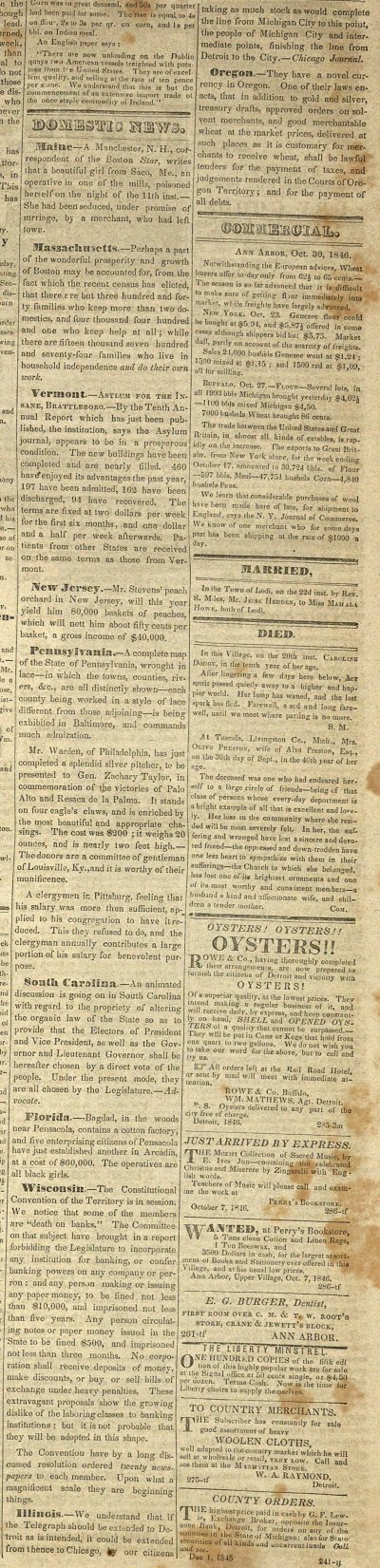
- Read more about Domestic News
- Log in or register to post comments